
"DMCA ignored" phrase offshore hosting marketing में हर जगह दिखती है, लेकिन असल कानून में कहीं नहीं। DMCA — United States Digital Millennium Copyright Act of 1998 — एक US statute है। Panama, Iceland या Moldova का server इससे बाध्य नहीं है, बस इतनी सी बात है। तो जब कोई host "DMCA ignored hosting" advertise करता है, तो उसका मतलब दो अलग चीज़ें होती हैं: (a) host को DMCA notices process करने की कोई क़ानूनी बाध्यता नहीं है क्योंकि वह US jurisdiction के बाहर operate करता है, और (b) host की written policy है कि वह US-style takedown letters पर voluntarily कार्रवाई नहीं करेगा।
ये दोनों एक नहीं हैं। पहली बात कानून है; दूसरी policy है। जो buyer इन्हें एक समझ लेता है, वह ऐसा host चुन लेता है जो technically friendly jurisdiction में होने के बावजूद पहली शिकायत पर ही content हटा देता है। यह guide इन दोनों के बीच की रेखा सावधानी से खींचती है, उन jurisdictions के नाम बताती है जो इस label को सच में back करती हैं, और उन जालों की चेतावनी देती है — सबसे ज़रूरी बात: "DMCA ignored" का मतलब "copyright ignored" नहीं है।
"DMCA ignored" का असल मतलब क्या है (और क्या नहीं)
किसी भी country list से पहले तीन सीधी बातें।
यह एक US statute है, international law नहीं
DMCA एक specific procedural regime स्थापित करता है — safe-harbour notice-and-takedown system जो 17 U.S.C. § 512 में codified है — जो United States में operate करने वाले online service providers पर लागू होता है। Romanian datacenter पर इसकी कोई statutory obligation नहीं है। Panama में incorporated hosting company पर भी नहीं, भले ही उसके founders American हों। Jurisdiction entity और server के साथ जाती है, customer के साथ नहीं।
इसका मतलब copyright-ignored नहीं है
हर offshore jurisdiction का अपना copyright कानून है। Iceland का है। Panama का है। Netherlands के पास EU directives और domestic statute दोनों हैं। "DMCA ignored" का मतलब है कि host US-style § 512 notices को autopilot पर process नहीं करता; इसका मतलब यह नहीं कि copyright complaints को systematically तब भी ignore किया जाता है जब वे host के home country के local legal system के ज़रिए filed हों। Formally served local-court order हर जगह गंभीर मामला रहता है।
यह ज़्यादातर content stability के बारे में है, legality के बारे में नहीं
customer के लिए, "DMCA ignored" का practical असर content stability है: एक US copyright holder जो SendCorp के ज़रिए form-letter notices भेज रहा है, वह US host की तरह 24 घंटों में takedown नहीं करा सकता। आपकी अपनी jurisdiction में underlying use legal है या नहीं — यह एक अलग सवाल है जिसका जवाब host आपके लिए नहीं दे सकता।
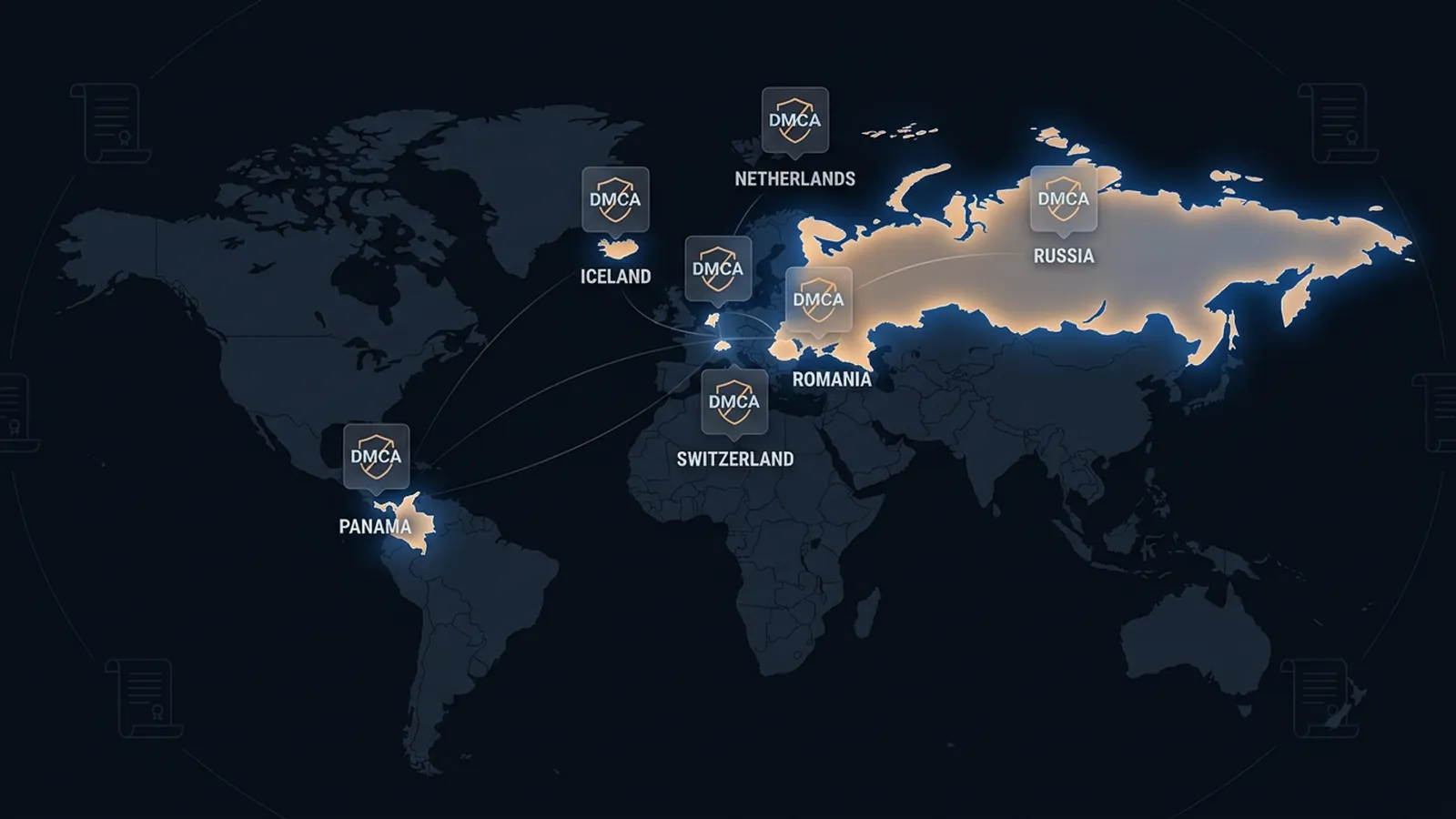
वे jurisdictions जो सच में DMCA notices process नहीं करतीं
हम जिन सात देशों में infrastructure run करते हैं, वहाँ के वर्षों के अनुभव से यहाँ jurisdiction-wise realistic तस्वीर है। पूरे legal context के लिए इसे हमारी jurisdiction guide के साथ पढ़ें।
सबसे मज़बूत: Russia, Panama, Moldova
इन तीनों jurisdictions में foreign copyright holders के लिए takedown demand करने का effectively कोई functioning channel नहीं है। Russia का US rights-holders के साथ civil cooperation 2022 से न्यूनतम था और अब नगण्य है। Panama के पास US के साथ civil copyright matters के लिए कोई MLAT नहीं है और takedown requests केवल local Panamanian court orders के ज़रिए process करता है, जिसके लिए local counsel और dual-criminality findings चाहिए जो copyright disputes में routinely fail होती हैं। Moldova के पास paper पर copyright law है लेकिन foreign civil complaints के लिए कोई enforcement infrastructure नहीं। इन तीनों में से किसी भी server पर, DMCA email एक inbox तक पहुँचती है जो उस पर act नहीं करता; केवल formal local court process ही कुछ move करा सकती है।
मज़बूत: Iceland, Switzerland
दोनों के पास functioning courts हैं और signed copyright treaties हैं (Berne, WCT) — ये lawless नहीं हैं। लेकिन दोनों के पास abuse के खिलाफ meaningful procedural barriers भी हैं। Iceland की IMMI-influenced jurisprudence intermediaries को drive-by takedowns से बचाती है; Icelandic Supreme Court ने बार-बार यह माना है कि hosts को extra-territorial administrative notices पर local judicial review के बिना act करने के लिए compel नहीं किया जा सकता। Switzerland के 2020 revised Copyright Act ने hosting providers के लिए DMCA-style notice-and-takedown को explicitly reject किया है, इसकी जगह एक stay-down requirement लाई जो केवल तभी apply होती है जब court ने content को infringing घोषित किया हो।
Mixed: Netherlands, Romania
दोनों EU member states हैं, और EU की 2019 Copyright Directive (विशेष रूप से Article 17) एक size threshold से ऊपर के platforms के लिए DMCA जैसा takedown regime introduce करती है। Traditional shared hosting और VPS के लिए — जहाँ customer publisher है, host नहीं — Dutch और Romanian hosts अभी भी "हम complaints customer को forward करते हैं; हम pre-emptively take down नहीं करते" का stance रख सकते हैं। लेकिन EU regime intermediaries पर अधिक दबाव की दिशा में जा रहा है, कम की नहीं, और इन दोनों jurisdictions में long-run trajectory Iceland या Panama से कम favorable है।
DMCA-sensitive workloads के लिए बचें: EEA में कहीं भी hosted platforms के लिए
अगर आप ~50k monthly users से ऊपर का user-generated-content platform चला रहे हैं, तो EU Digital Services Act और Article 17 regime सीधे आप पर लागू होते हैं चाहे server कहीं भी हो, जब तक आप EU users को target करते हैं। Server की jurisdiction अकेले काफी नहीं है; platform के पीछे legal entity भी मायने रखती है।
वे use cases जिन्हें legitimately DMCA-ignored hosting की ज़रूरत है
हर project को इसकी ज़रूरत नहीं। ज़्यादातर को नहीं होती। Netherlands में hosted एक static personal blog अपनी lifetime में कभी DMCA notice नहीं देखेगा। वे categories जहाँ label सच में मायने रखता है:
- File hosts और download mirrors — कुछ भी जहाँ users archives upload करते हैं, host content vet नहीं कर सकता, और copyright holders systematically matches scan करते हैं। यह original "DMCA ignored" use case है और market का bulk है।
- Streaming और IPTV infrastructure — live-stream restreaming, sports relay nodes, IPTV middleware। Rights-holders network speed पर takedowns fire करते हैं; एक host जो उन्हें network speed पर process करे वह service को monetise होने से पहले ही kill कर देता है।
- Forum और image-board operators — ऐसी communities जहाँ moderation decentralised है और DMCA notices उस content पर आती हैं जो operator ने post नहीं की। US host operator को responsible party मानता है; offshore DMCA-ignored host notice forward कर देता है और operator को handle करने देता है।
- Adult content platforms — obvious के अलावा, adult platforms पर rights-holders और competitors की ओर से DMCA notices की बाढ़ आती है जो takedown DoS के रूप में filed होती हैं। DMCA-ignored operationally ज़रूरी है।
- Self-hosted research mirrors और archives — out-of-print works के academic mirrors, legally analyse किए जा रहे leaked corporate documents, journalism archives। US-jurisdiction hosts इन्हें stably host नहीं कर सकते भले ही use fair हो।
- Crypto mixers और privacy infrastructure — copyright से related नहीं लेकिन compliance vendors की ओर से similar takedown velocity trigger करते हैं; वही jurisdictional logic apply होती है।
अगर आपका project इनमें से किसी में नहीं आता, तो आपको specifically DMCA-ignored hosting की ज़रूरत शायद नहीं है — आपको privacy-friendly hosting चाहिए, जो एक broader और सस्ती category है।
जाल: वे copyright laws जिन्हें DMCA नहीं कहा जाता
"DMCA ignored" एक कानून की ओर इशारा करता है। हक़ीकत एक patchwork है।
EU Article 17 / Copyright Directive
2019 Copyright Directive "online content-sharing service providers" पर यह obligation डालती है कि वे user uploads के लिए authorization प्राप्त करें या यह demonstrate करें कि उन्होंने infringement रोकने की पूरी कोशिश की। Article 17 को member states में बहुत अलग-अलग तरह से interpret किया जाता है — Germany और France ने strict regimes implement किए हैं, जबकि Romania और Bulgaria अधिक सावधानी से आगे बढ़े हैं। Romania में DMCA-ignored host को भी यह deal करना पड़ता है अगर उसके किसी customer का platform EU users को target करता है।
UK Online Safety Act (2023)
अब लागू है। Specifically copyright regime नहीं, लेकिन इसके "illegal content" provisions copyright infringement को cover करते हैं और UK users वाली किसी भी service पर extraterritorially apply होते हैं। Offshore hosts के खिलाफ enforcement अब तक theoretical रही है लेकिन statutory hook मौजूद है।
Swiss URG revision (2020)
Switzerland के revised copyright act ने court ruling के बाद hosts के लिए "stay-down" obligation introduce की। इसे trigger करने का bar ऊँचा है (formal Swiss court ruling), लेकिन trigger होने पर removal mandatory हो जाता है और re-upload monitoring host की ज़िम्मेदारी बन जाती है।
Russian Article 156 / 146 (criminal copyright)
Russia के पास commercial-scale infringement के लिए criminal copyright regime है, repeat offenders के लिए जेल की सज़ा। यह foreign rights-holders के लिए practically कभी enforce नहीं होता, लेकिन exist करता है; एक Russian host जो publicly known piracy operation चलाए, उसे theoretically criminal exposure हो सकता है।
Operational checklist: एक DMCA-ignored host की जाँच कैसे करें
Marketing page से आगे पढ़ें। वे signals जो एक serious DMCA-ignored host को किसी के server के dropshipper से अलग करते हैं:
- नाम की गई jurisdiction में self-owned hardware। अगर host Panama का दावा करता है लेकिन Frankfurt datacenter resell करता है, तो German upstream DMCA notices receive और act करेगा चाहे front-end host कुछ भी promise करे। Location proof माँगें: traceroute, RIPE/ARIN allocation, datacenter name।
- Written abuse policy। एक real DMCA-ignored host अपनी abuse-handling policy publish करता है। "हम unverified takedown notices customer को forward करते हैं; हम local court order के बिना take down नहीं करते" — यह minimum honest version है। "हम सभी complaints ignore करते हैं" marketing है।
- Local legal counsel disclosed। Serious offshore hosts अपनी home jurisdiction में counsel retain करते हैं और इसे AUP page पर disclose करते हैं। Counsel ही host का बचाव करता है जब actual local-court complaint आती है।
- Acceptable use clarity। सबसे permissive hosts भी एक hard floor maintain करते हैं: CSAM, private individuals की doxxing, malware distribution, terrorism। जो hosts "absolutely anything" promise करें उनसे सावधान रहें — वे jurisdiction चाहे जो हो, eventually raid होंगे।
- Pressure के तहत track record। Public incidents promises से ज़्यादा मायने रखते हैं। क्या host पहले के coordinated takedown attempts में up रहा? क्या किसी customer ने warrant-canary updates publish किए हैं? Real DMCA-ignored hosts का paper trail होता है।
- Payment privacy। जो host identity-verified payment require करे वह honestly no-KYC operator होने का दावा नहीं कर सकता। Crypto-only — preferably Monero option के साथ — minimum है।
जब DMCA-ignored काफी नहीं होता
कुछ workloads को host के takedown notices ignore करने से ज़्यादा चाहिए; उन्हें पूरे infrastructure को coordinated state-level pressure के प्रति resistant बनाना होता है। Escalation ladder, सस्ते से महँगे तक:
Step 1: DMCA-ignored shared VPS
$10/month VPS Panama या Moldova में। Personal mirrors, small forums, low-volume file hosts के लिए पर्याप्त। Host US notices पर act नहीं करेगा; एक small target के खिलाफ actual local court order unlikely है। VPS plans देखें।
Step 2: Dedicated server, single tenancy
$60+/month dedicated। Co-tenant attack surface हटाता है (देखें VPS vs dedicated guide) और आपको full disk encryption देता है जिसका passphrase host recover नहीं कर सकता। Mid-size platforms और rights-sensitive content के लिए पर्याप्त।
Step 3: Multi-jurisdiction architecture
Primary Iceland में, hot standby Panama में, DNS किसी तीसरे देश में, customer-facing edge किसी चौथे में। हर layer procedurally independent है। एक coordinated takedown campaign जो एक node के खिलाफ succeed करे, platform को चलता रहने देती है। यह category के हर long-lived large platform का configuration है।
Step 4: Onion service या I2P-only distribution
सबसे contested workloads के लिए, clearnet site fallback बन जाती है और primary distribution channel Tor onion service होती है। Tor-hosting setup के साथ combine करें। DMCA को ऐसी service से ज़्यादा reliably ignore करने वाली कोई चीज़ नहीं जिसका कोई IP address ही न हो।