
Picking an offshore hosting jurisdiction in 2026 is the single highest-leverage privacy decision you will make on a project — bigger than the operating system, bigger than the payment coin, bigger than whether you front the box with Cloudflare. The server can be hardened. The coin can be swapped. The country your bytes physically sit in cannot be retrofitted. This guide breaks the choice into six axes, walks through seven jurisdictions, and gives you a decision framework keyed to four real-world archetypes.
Skip to the interactive selector if you want a quiz. Read on if you want to understand why it answers the way it does.
The six axes that actually matter
Most "best offshore hosting" articles compare countries on speed and uptime, which is irrelevant to a privacy decision. What you actually need is a clean read on six concrete legal and operational factors.
1. Mandatory data retention
Some countries legally require hosting providers, ISPs, or both, to store connection metadata for a minimum period. The EU's NIS2 Directive (in force since October 2024) tightened cybersecurity reporting obligations across all 27 member states but stopped short of the full data-retention regime that the 2014 Court of Justice Digital Rights Ireland ruling struck down. As of 2026, blanket retention is illegal at the EU level — but member-state law varies, and some non-EU countries impose 6-month or 1-year retention windows on telecoms-adjacent operators.
2. MLAT exposure
A Mutual Legal Assistance Treaty is a bilateral agreement that lets law enforcement in one country compel evidence held in another. The most relevant for English-speaking customers is the US set: about 70 active MLATs, with notable absences (Panama has no MLAT with the US for criminal matters; Russia's was suspended in 2022). MLAT requests typically take 6 to 12 months to process and require dual criminality — meaning the conduct under investigation has to be a crime in the receiving country too.
3. GDPR and other privacy floor laws
For EU/EEA jurisdictions you get GDPR scope as a default — meaning a clear data-subject access pipeline, a 72-hour breach notification clock, and a regulator you can complain to. Switzerland mirrors this with the revised Federal Act on Data Protection (revFADP, in force since September 2023). Outside these, Iceland implements the EEA version of GDPR; Panama, Moldova and Russia do not.
4. Takedown latency
How fast can a third party — copyright holder, foreign government, civil litigant — actually get content pulled off a server in this country? In Iceland and Switzerland, a court order is required and can take weeks. In US-cooperating EU states it can be days. In Panama, Russia and Moldova, MLAT requests for takedown are routinely shelved or denied.
5. Infrastructure quality
Network capacity, IPv4 availability, DDoS-mitigation maturity, and physical-datacenter security all vary. Switzerland and the Netherlands top this axis. Moldova and Panama are workable but thinner. Russia is large but increasingly cut off from major Western transit providers since 2022.
6. Censorship resistance
Will the local government itself pressure your host to remove content? Iceland's IMMI initiative (parliamentary resolution passed 2010, ongoing implementation) makes Iceland one of the strongest free-speech jurisdictions in Europe. Switzerland's neutrality plus high constitutional bar on speech restrictions make it second. The Netherlands has tightened in the last three years on extremist content. Russia censors heavily on domestic political content but typically ignores Western legal pressure.
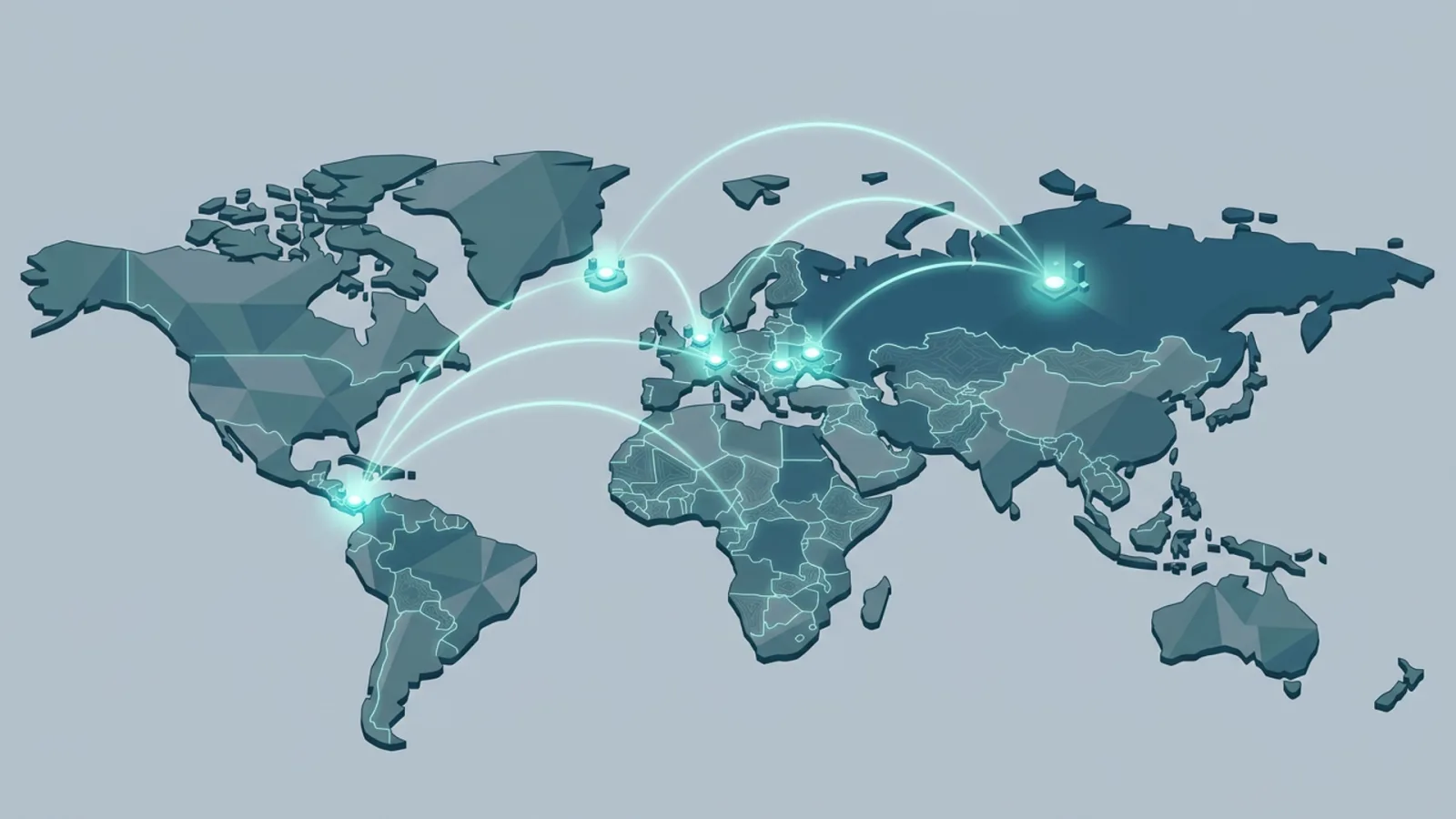
Seven jurisdictions, side by side
Below is a snapshot of the seven jurisdictions covered on our locations page. Each pick is shorthand — read the full country pages for the underlying law.
| Country | Data retention | MLAT with US | GDPR scope | Takedown speed | Best for |
|---|---|---|---|---|---|
| Iceland | None for hosting | Yes (1996) | EEA-equivalent | Slow (court order) | Journalism, leaks, free speech |
| Panama | None | No | None | Very slow | Hard takedown resistance |
| Moldova | None enforced | Yes (2014) | National only | Slow | Budget no-KYC, light enforcement |
| Romania | None (2014 ruling) | Yes (2009) | Full GDPR | Medium | EU compliance + privacy floor |
| Switzerland | 6 months telecom only | Yes (1977) | revFADP (GDPR-equiv) | Slow (court order) | Stability, finance-grade |
| Netherlands | None for hosts | Yes (1981) | Full GDPR | Fast | High-perf EU peering |
| Russia | 1 year (Yarovaya) | Suspended 2022 | None | Effectively none for Western requests | Maximum legal distance from US/EU |
Romania: the 2014 ruling that still matters
In July 2014, Romania's Constitutional Court (Decision No. 440/2014) struck down the country's transposition of the EU Data Retention Directive — months before the EU Court of Justice did the same thing in Tele2/Watson. As of 2026 Romania has no general data-retention obligation on hosts or ISPs, while still being a full EU member state with GDPR scope. That combination — EU privacy floor + no retention + cheap power + dense IPv4 supply — is why Bucharest has become one of the most active offshore hosting hubs in Europe.
Switzerland: privacy through process, not absence
Swiss BÜPF (Surveillance of Post and Telecommunications Act) revisions in 2018 expanded what telecoms can be ordered to retain — but pure hosting providers fall outside its scope. Combined with the revFADP since 2023 and a constitutional bar on warrantless searches, Switzerland gives you privacy via slow, expensive, court-supervised process rather than legal nonexistence of the law.
Iceland and IMMI
Iceland's parliament passed a resolution in 2010 (the Icelandic Modern Media Initiative) directing the government to enact world-leading whistleblower, source-protection and free-speech laws. Implementation has been incremental — 2026 is the year a final consolidated act is expected — but the operational reality is that Icelandic courts have for over a decade refused foreign takedown requests that conflict with domestic free-expression norms.
Decision framework: pick by archetype
If you over-index on one axis you'll get a worse outcome than picking sensibly across all six. Here are four common archetypes and the matching jurisdiction.
Archetype 1: the journalist
You're a reporter or whistleblower platform operator. Your threat is takedown via copyright pretext, defamation suit, or foreign-state pressure. Pick Iceland — IMMI legal protections, EEA privacy floor, slow takedown process, strong courts. Second choice: Switzerland.
Archetype 2: the sysadmin / SRE
You run infrastructure for a small business or NGO that simply doesn't want US-court jurisdiction over its data. Threat: MLAT subpoenas, civil discovery. Pick Romania — full GDPR, no retention, cheap, EU peering, stable. Second choice: Netherlands.
Archetype 3: the crypto operator
You run a self-custodial node, a payment processor, or a DeFi backend. Threat: regulatory fishing expeditions, exchange-style KYC creep. Pick Panama or Moldova — no MLAT or weak MLAT, no native privacy regulator, hosts are unregulated. Second choice: Iceland.
Archetype 4: the content publisher
You run a forum, image board, or large-scale community with copyright-adjacent grey areas. Threat: DMCA flood, repeated takedown notices. Pick Russia — for maximum legal distance. Second choice: Panama. If you need EU-language audiences and faster transit, Moldova is a workable middle.
What you should not optimise for
A few pitfalls that show up in nearly every "best offshore" article and are mostly noise.
Latency
The difference between a server in Bucharest and one in Reykjavík is 30–80ms for European users — meaningful for trading bots, irrelevant for blogs, mail, VPN endpoints, build hosts and almost everything else. Don't trade jurisdiction for 50ms.
"Bulletproof"
Marketing language. There is no such thing as a host that ignores all law everywhere. Every legitimate operator complies with court orders in its own jurisdiction; the question is which jurisdiction's orders apply. Anyone selling you genuine "bulletproof" is either ignoring known abuse vectors (CSAM, active malware) or is itself the threat.
Currency stability
Irrelevant when paying in crypto. The host quotes USD, you settle in BTC/XMR/etc. Local currency volatility is the host's problem.
Operational checklist
Once you've picked the country, verify these before you commit:
- Local ASN ownership. The hosting company should own (or have a long lease on) IP space attributed to that country, not transit through a US/UK upstream that holds the actual peering relationships.
- Physical datacenter, not a reseller. If your provider is reselling capacity from a US-based cloud, the US courts can lean on the upstream regardless of what your contract says.
- Acceptable Use Policy that matches the jurisdiction. If a Panama-based host's AUP reads like AWS's, they're going to enforce it like AWS too.
- Crypto-native checkout. A host that requires KYC verification before accepting Bitcoin has effectively imported MLAT exposure through the back door. Confirm the payment flow before signing up.
- Read the transparency report. Or note the absence of one. A host that has never published one in five years is hiding either a lot of takedowns or a lot of cooperation.
To map your specific threat model to a country interactively, run our 7-question jurisdiction selector. To compare side-by-side on the six axes above, see all locations. For deeper jurisdiction-specific reading: DMCA-ignored hosting, anonymous hosting, and no-KYC hosting. For the operational layer that complements jurisdiction, read VPS vs dedicated and crypto payments compared.